


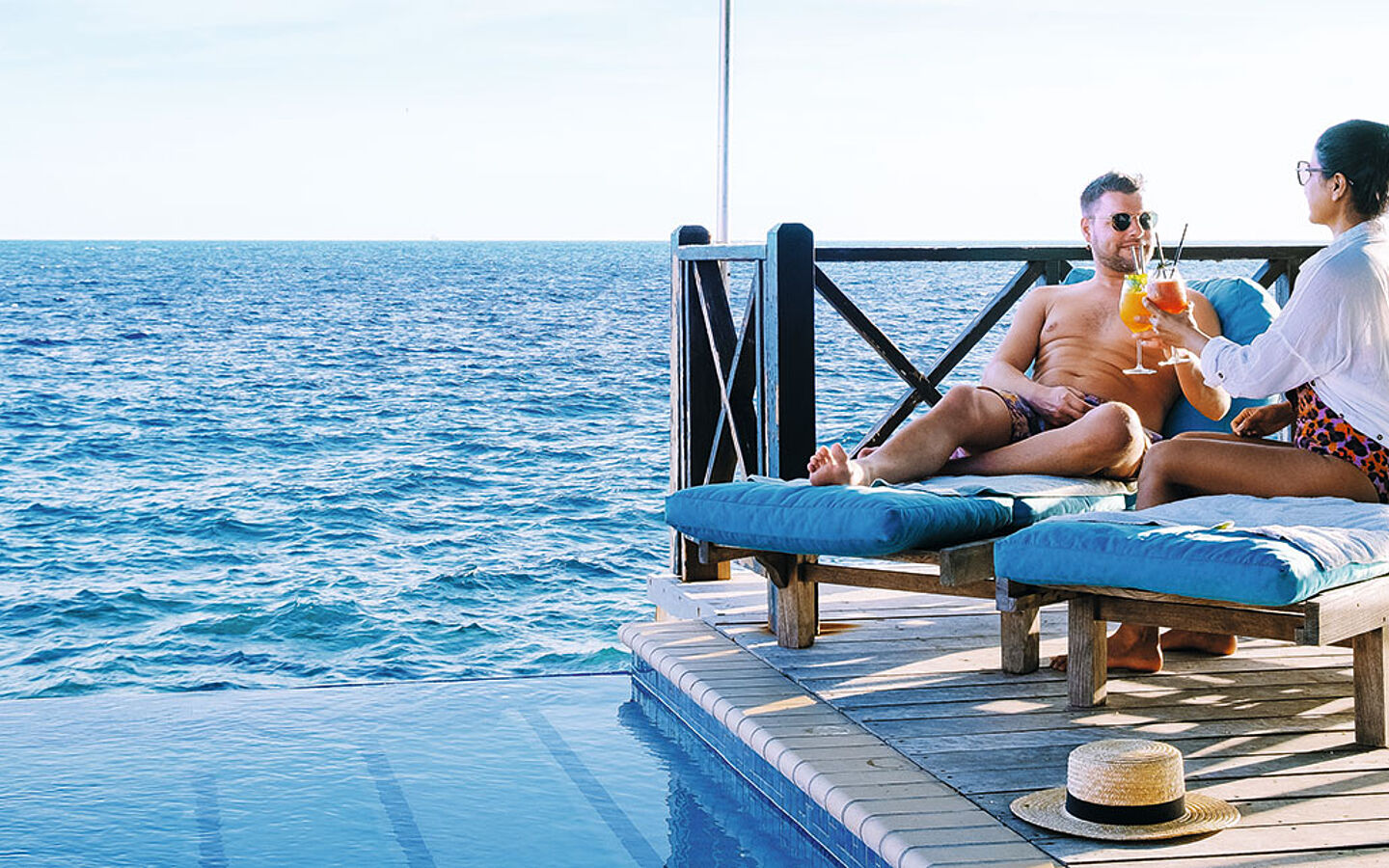
Curaçao
"Dushi" - in the local language Papiamentu, this means "everything that is beautiful", like the street art paintings in the World Heritage city of Willemstad with its candy-colored colonial houses. But it also means "everything that tastes good", like the island's own orange liqueur. And it also means "everything that looks fantastic", such as the powdered sugar beaches and bays on the turquoise blue sea. This paradise was discovered in 1499 by the Spaniard Alonso de Ojeda. 200 years later, the Dutch arrived and conquered the island for the Dutch crown.
Due to its large natural harbour, Curaçao soon became the Caribbean center of the slave trade, until 1862 to be precise. Democracy came to the Caribbean island with the first free elections in 1937, and its 50 nationalities are still reflected today in its multi-layered culture and linguistic diversity.
The capital Willemstad is colorful and picturesque. The alleyways in the districts of Punda, Otrobanda, Pietermaai and Scharloo are lined with colorful colonial houses, which have been a UNESCO World Heritage Site since 1997. During a stroll through the city, you can observe the "floating market" during the day, spend a sociable evening in the hip Pietermaai district with its candy-colored facades or admire the creative street art paintings on a stroll through Scharloo. The Queen Emma Bridge, which separates the two districts of Otrobanda and Punda, is also a must-see. Locals affectionately call it the "Swinging Old Lady", because as a pontoon bridge on a total of 16 boats that open up for ships in the harbor entrance, it is unique in the world. It also offers the best view of the famous Handelskade and Fort Amsterdam. The meeting point for both locals and tourists is the "Netto Bar", where you should definitely try the home-made Ròm Bèrdè - either straight, mixed with coconut water or as a cocktail. Sun worshippers will find the best beaches for relaxing on Kontiki Beach, Sea Aquarium Beach and Mambo Beach in the east of Curaçao's capital. Playa Porto Marie offers the best diving spots with a fantastic underwater landscape. And you should definitely pay a visit to the many pink flamingos foraging in the salt pans.
The Blue Curaçao
The occupying forces were responsible for the invention of the Blue Curaçao liqueur, bringing the delicious Valencia orange with them. Even today, the Curaçao Liqueur Distillery in the east of Willemstad still brews according to the original recipe from 1896. That's why a visit to Landhuis Chobolobo is not only worthwhile for the interesting tour of the production facilities, but also for the subsequent tasting. We know it as Cosmopolitan, Blue Haze or the typical blue-colored cocktail called Swimming Pool. Here on the island, it is not only found in the bars, but also in the almost 60 "Landhuizen" from the 18th and 19th centuries, which now function as restaurants. Whether you should necessarily buy the liqueur as a souvenir to take home is up to you. If so, then something more artistic in the form of the "Chi Chi" figures by German artist Serena Israel, who is based on Curaçao. Colorfully painted, they are reminiscent of Niki de Saint Phalle's Nana sculptures.
Curaçao for sports fans
Christoffel Park, the largest nature reserve at 2,500 hectares with its 375-metre-high mountain, is an island highlight, especially for nature and hiking enthusiasts. After a 60-minute climb through cacti, orchids and bromeliads, you will come across lizards, iguanas and the national bird, the tupial, and once at the top you can enjoy a wonderful view over the entire northern part of the island. Among Curaçao's oldest cultural treasures are the Hato Caves - a 5,000 m2 cave system in the north. In addition to the bizarre limestone formations, you will find ancient rock carvings of indigenous people and slaves who found shelter here.
Golf at its finest on the Old Quarry Golf Course
The 18 holes by golf designer Pete Dye in the south-east of the island will make every golfer's heart beat faster, as they are spread over three areas: directly by the sea, by Spanish Water Bay and by the 198-metre-high Table Mountain, which guarantees a brilliant tee shot onto the 13th green. But that is certainly not the only reason why the championship course is one of the best in the Caribbean. In addition to deserts, bushes and bunkers, rocky terrain and gigantic downhill shots, the course also offers wonderful views of the sea, the marina and the new Sandals Resort, which has just opened.
Hotels
![[Translate to en:]](/fileadmin/_processed_/0/3/csm_Karibik_Kachel_Website_bd14d92320.png "[Translate to en:]")
![[Translate to en:]](/fileadmin/_processed_/d/c/csm_csm_Burj_Khalifa_6aa4204cda_c60dbba775.png "[Translate to en:]")

![[Translate to en:]](/fileadmin/_processed_/5/6/csm_2_prb23_0733_web_230fecf93e.jpg "[Translate to en:]")






























![[Translate to en:]](/fileadmin/_processed_/0/3/csm_Karibik_Kachel_Website_4fa96af5ad.png "[Translate to en:]")
![[Translate to en:]](/fileadmin/_processed_/d/c/csm_csm_Burj_Khalifa_6aa4204cda_6e24649320.png "[Translate to en:]")
![[Translate to en:]](/fileadmin/_processed_/5/6/csm_2_prb23_0733_web_8dbd0bd4df.jpg "[Translate to en:]")