


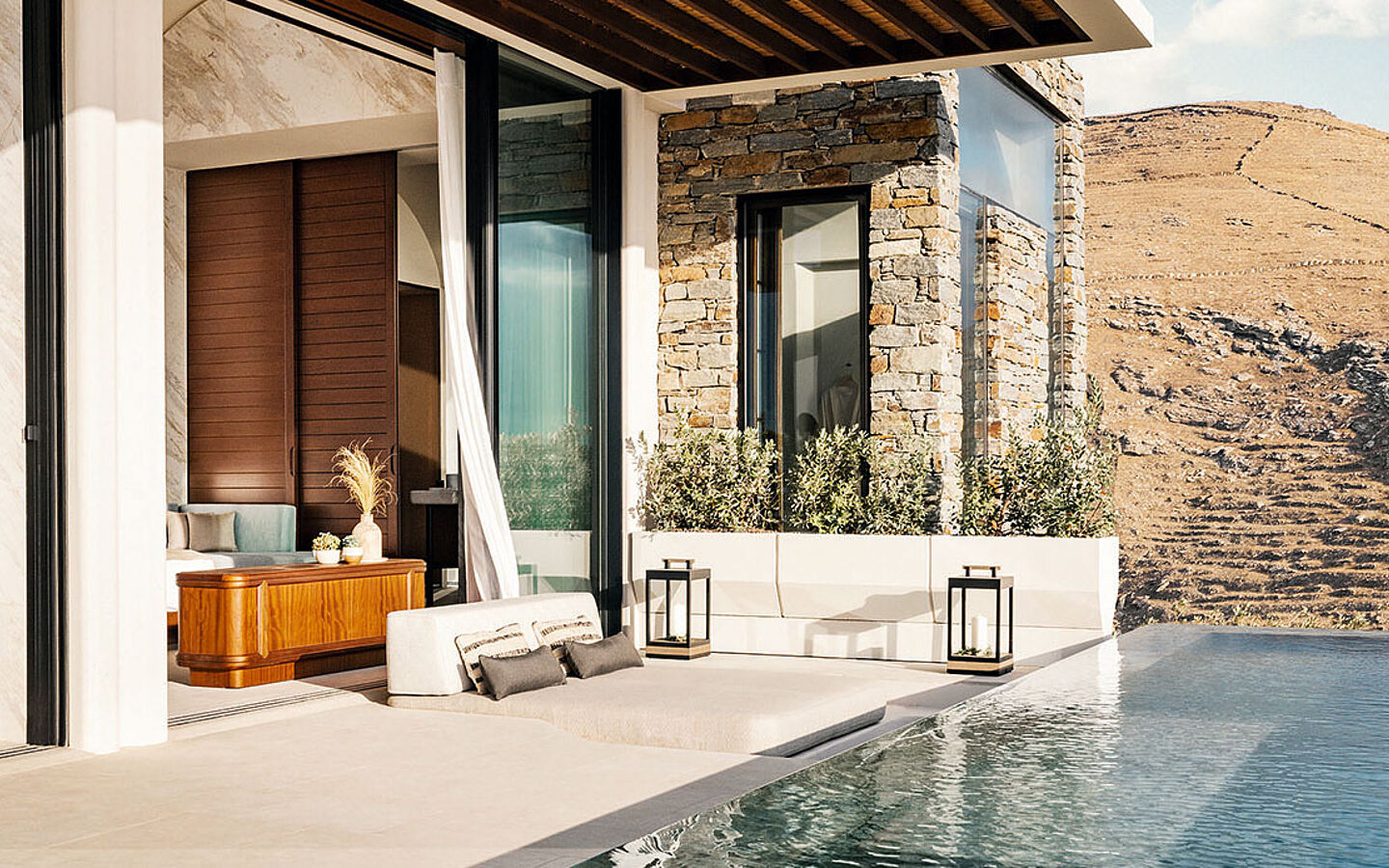
Kea
26. 11. 2025 Readingtime: 2 Minuten
Ancient authors defined the number and size of the islands differently. Strabon (Geography 10, p. 485) lists twelve islands: Keos, Kythnos, Seriphos, Mēlos, Siphnos, Kimolos, Paros, Naxos, Syros, Mykonos, Tēnos and Andros. Artemidoros and later Pliny increased this number to fifteen (with Prepesinthos (Despotiko), Ōliaros (Andiparos) and Kyaros (Gyaros)). The list of pseudo-Skylax differs from others in that it lists a northern and a southern group. With Keos, Helena (Makronisos), Kythnos, Seriphos, Siphnos, Paros, Naxos, Dēlos, Rhēnē (Rinia), Syros, Mykonos, Tēnos and Andros in the northern and Mēlos, Kimolos, Ōliaros, Sikinos, Thēra (Santorini), Anaphē and Astypalaia in the southern group, his definition includes most of the islands of today's prefecture and also Astypalea, which is now part of the Dodecanese. Most ancient authors, however, generally followed Strabo's classification, although occasionally Rhēnē was used instead of Mēlos[2].
The islands of the Cyclades consist mostly of gneiss and mica schist, sometimes also granite and volcanic rock. Because of their fertility and mild climate, the ancients called them the "pearls of Hellas". Today, however, many of the islands are devoid of tree vegetation and are therefore arid, bare and scorched. Nevertheless, they still produce wine, oil, cotton, silk, tropical fruits, honey, etc.
The islands of the Cyclades consist mostly of gneiss and mica schist, sometimes also granite and volcanic rock. Because of their fertility and mild climate, the ancients called them the "pearls of Hellas". Today, however, many of the islands are devoid of tree vegetation and are therefore arid, bare and scorched. Nevertheless, they still produce wine, oil, cotton, silk, tropical fruits, honey, etc.
Hotels

![[Translate to en:]](/fileadmin/_processed_/0/3/csm_Karibik_Kachel_Website_bd14d92320.png "[Translate to en:]")
![[Translate to en:]](/fileadmin/_processed_/d/c/csm_csm_Burj_Khalifa_6aa4204cda_c60dbba775.png "[Translate to en:]")

![[Translate to en:]](/fileadmin/_processed_/5/6/csm_2_prb23_0733_web_230fecf93e.jpg "[Translate to en:]")













































![[Translate to en:]](/fileadmin/_processed_/0/3/csm_Karibik_Kachel_Website_4fa96af5ad.png "[Translate to en:]")
![[Translate to en:]](/fileadmin/_processed_/d/c/csm_csm_Burj_Khalifa_6aa4204cda_6e24649320.png "[Translate to en:]")
![[Translate to en:]](/fileadmin/_processed_/5/6/csm_2_prb23_0733_web_8dbd0bd4df.jpg "[Translate to en:]")