


Oman
Promotion
Oman
26. 11. 2025 Readingtime: 6 Minuten
A country where the desert meets the sea, where rugged mountains enclose green oases and ancient traditions merge with modernity - Oman is the realm of surprises.
Oman is not a country that reveals itself immediately; it challenges travelers to delve deeper into their souls with every step they take. But those who do embark on it will experience an adventure that beguiles the senses and captivates the mind - from the majestic mountains to the silent, endless deserts. The hidden gem of the Arabian Peninsula fascinates with an extraordinary variety of landscapes and cultural treasures. Shaped by millennia-old trade routes and a deeply rooted culture, the sultanate offers an incomparable blend of natural beauty and unique experiences.
700394

700394

700394

700394

700394

700394

700394

700394

700394

Oman's coastline stretches for more than 3,000 km and offers enchantingly diverse landscapes that amaze visitors. In the north, near the capital Muscat, colorful pebble beaches and clear turquoise waters attract snorkelers and divers. Here you can swim with the largest fish in the world, the whale sharks, during the summer months. These gentle giants, which can grow up to ten meters long, migrate to the plankton-rich waters around the Daymaniyat Islands between July and November. The sight of a whale shark gliding majestically through the water is an experience that leaves a deep impression and will be remembered forever. In the very south of the country, in the Dhofar region, the coast shows a completely different side. Especially during the khareef season, when the monsoon rains transform the region into a green oasis, the landscape is almost unearthly in its beauty. Here, on the cliffs around Salalah, there is a unique natural spectacle: dolphins hunt in the large shoals of sardines that are driven close to the coast by the current. From the high cliffs that rise dramatically above the sea, you can watch these elegant marine mammals leap out of the water and glide playfully through the waves. Another natural wonder that the coasts of Oman have to offer is the phenomenon of the sea glow. When the bioluminescent plankton in the waves is disturbed, it begins to shimmer in a brilliant blue. This fascinating spectacle can be admired especially during the clear, calm nights between October and April on the coasts of Muscat, the Sugar Dunes near Al Khaluf and on Masirah Island. A night-time excursion by kayak, where the water begins to glow under the paddles, is unforgettable and blurs the line between reality and fairy tale.
Spectacular natural phenomena meet an equally diverse culture. In the fishing villages along the coast, part of the old seafaring tradition has been preserved. Oman was once an important hub on the trade routes between Africa, India and the Middle East. This past is reflected in the harbor towns, where traditional dhow boats are still built today. A trip on such a dhow along the coast of Musandam, past the fjord-like bays that characterize this region, not only offers impressive views, but also an insight into the country's centuries-old seafaring culture. The fjords of Musandam, which are cut deep into the land, are surrounded by imposing mountains whose rugged cliffs plunge directly into the sea. On
rocking on the gentle waves while the sun slowly sinks into the sea and dolphins accompany the dhow is an experience that touches the soul.
The diversity of the Omani landscape is also reflected in the numerous wadis, which seem like hidden paradises in the middle of the desert and the mountains. Wadis are river valleys that often only fill with water after rainfall, but some carry water all year round, providing a refreshing oasis amidst the barren surrounding landscapes. Wadi Bani Khalid is famous for its emerald green pools and the impressive rock formations that surround it. Here you can relax on the shores, unwind or refresh yourself in the cool water. The Wadi Bimah, also known as the Snake Canyon, is ideal for adventure seekers. The winding gorge challenges you with climbing and canyoning elements, where you scramble over rocks, abseil and jump into deep pools of water. The narrow gorges, some of which are only a few meters wide, offer spectacular views and make every tour an exciting experience. Further south, in Wadi Darbat, a different kind of beauty unfolds during the khareef season. The area is transformed into a green oasis with waterfalls and turquoise lakes, where dromedaries graze on the banks. Here, Oman shows an almost tropical side that you would not expect in a country that is largely desert. The landscape is characterized by lush vegetation and the sound of the waterfalls accompanies hikers on their way through the valley.
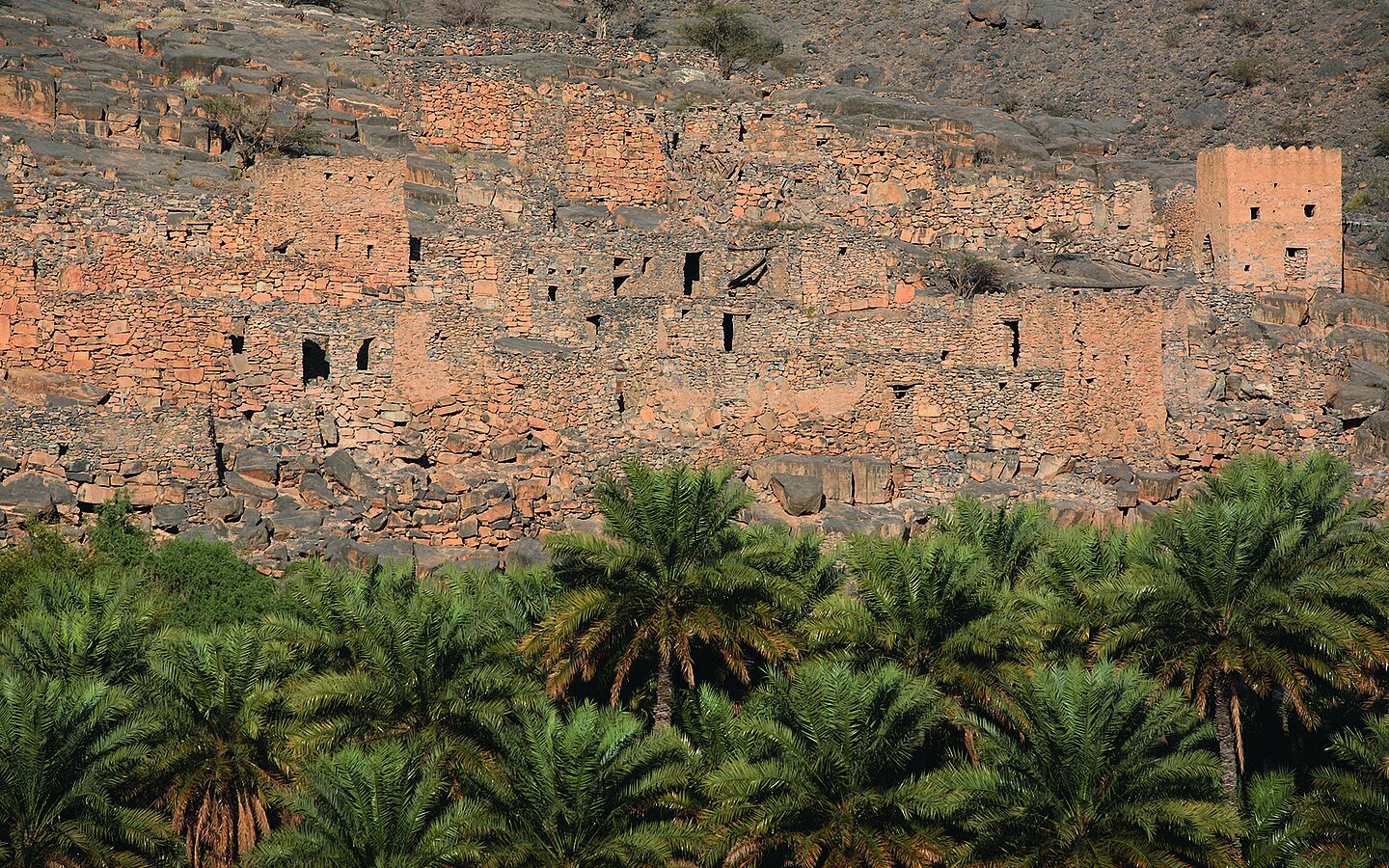
Oman's high mountains also promise exciting adventures. The Jabal Shams, at 3,075 meters the highest mountain in the Sultanate, offers breathtaking views and challenging hiking trails. The Balcony Walk, which runs along the edge of Wadi Ghul, also known as the "Grand Canyon" of Oman, is surrounded by impressive panoramas and leads to an abandoned village deep in the gorge. The hike along the steep cliffs requires a head for heights, but is rewarded with magnificent views. Those looking for a challenge can venture onto the Via Ferrata on the Jabal Akhdar, where via ferratas and abseiling routes provide the necessary thrills. The view from the peaks of the mountains, which rise majestically above the landscape, is unforgettable.
The country's rich culture is fascinating in the villages of the mountain regions, such as Wakan or Misfat Al Abriyeen, where traditional life is still omnipresent. Here, the water from the mountains is channelled through the millennia-old Aflaj irrigation systems, which are a UNESCO World Heritage Site. These canals, which run through the villages, supply the terraced gardens with water, creating fertile oases in the middle of the barren landscape. The narrow, winding streets of the villages invite you to take a stroll and admire the ornately decorated doors of the houses, which are a sign of the prosperity and craftsmanship of the inhabitants. In spring, the scent of Damask roses fills the air on the Jabal Akhdar, and the locals harvest the fragrant blossoms from which the precious rose water is extracted. The pomegranates and apricots that thrive in the terraced fields are further proof of the fertility of these mountain regions. Another cultural highlight is the traditional cattle market in Nizwa. Every Friday morning, traders from the region gather to sell their animals. In this bustling atmosphere, people haggle, discuss and trade, and visitors can experience at first hand how deeply rooted traditions are in this country. A stroll through the souk of Nizwa, where spices, incense and handmade souvenirs are on sale, rounds off the experience. Nizwa, once the capital of the country, is a place where history comes alive. With all its wonders, from cultural treasures to natural jewels, Oman enchants like a land from the tales of 1001 Nights and casts an irrevocable spell on anyone who visits.
www.experienceoman.om
Hotels


![[Translate to en:]](/fileadmin/_processed_/0/3/csm_Karibik_Kachel_Website_bd14d92320.png "[Translate to en:]")
![[Translate to en:]](/fileadmin/_processed_/d/c/csm_csm_Burj_Khalifa_6aa4204cda_c60dbba775.png "[Translate to en:]")

![[Translate to en:]](/fileadmin/_processed_/5/6/csm_2_prb23_0733_web_230fecf93e.jpg "[Translate to en:]")
















































![[Translate to en:]](/fileadmin/_processed_/0/3/csm_Karibik_Kachel_Website_4fa96af5ad.png "[Translate to en:]")
![[Translate to en:]](/fileadmin/_processed_/d/c/csm_csm_Burj_Khalifa_6aa4204cda_6e24649320.png "[Translate to en:]")
![[Translate to en:]](/fileadmin/_processed_/5/6/csm_2_prb23_0733_web_8dbd0bd4df.jpg "[Translate to en:]")