


Once a superpower, now a super gem



Light years away from mass tourism, tiny Syros hides among its famous island sisters. And hopefully it will stay that way!
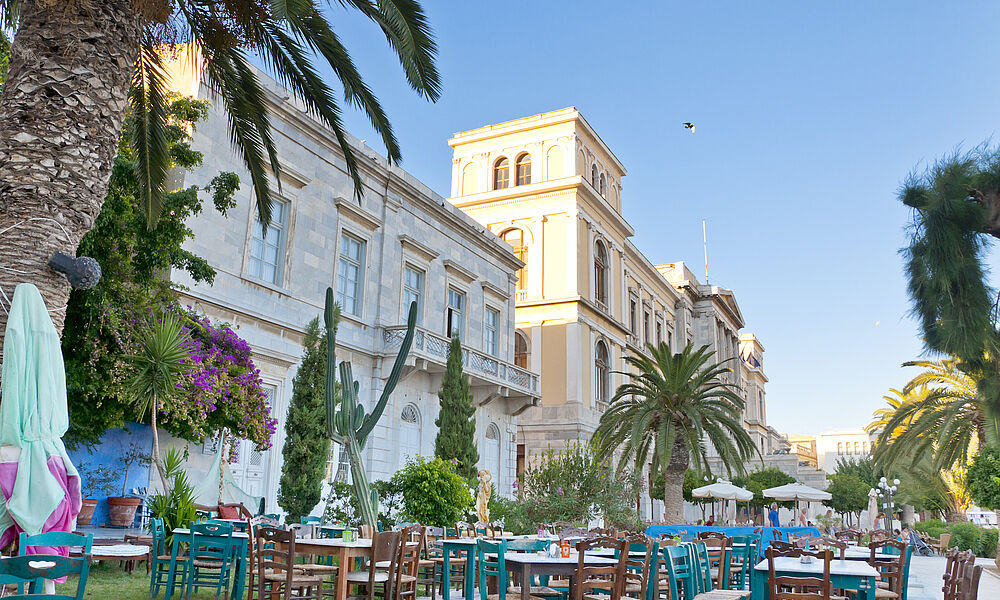
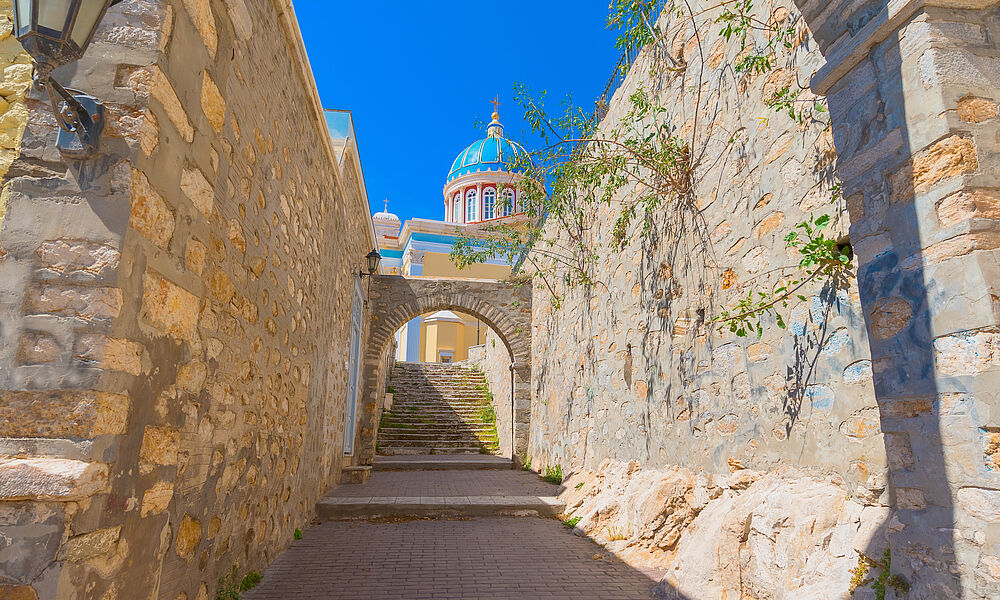
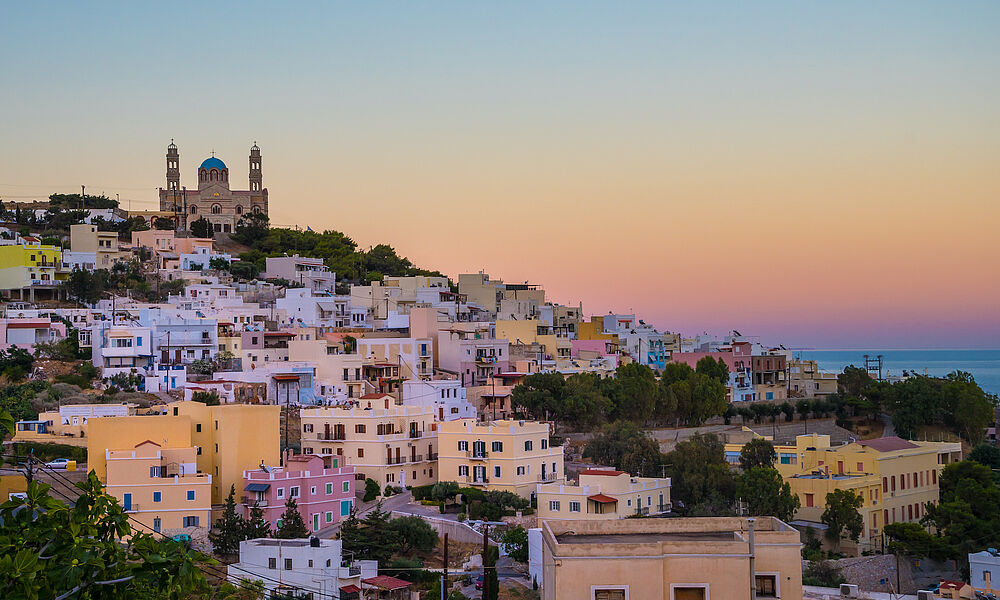
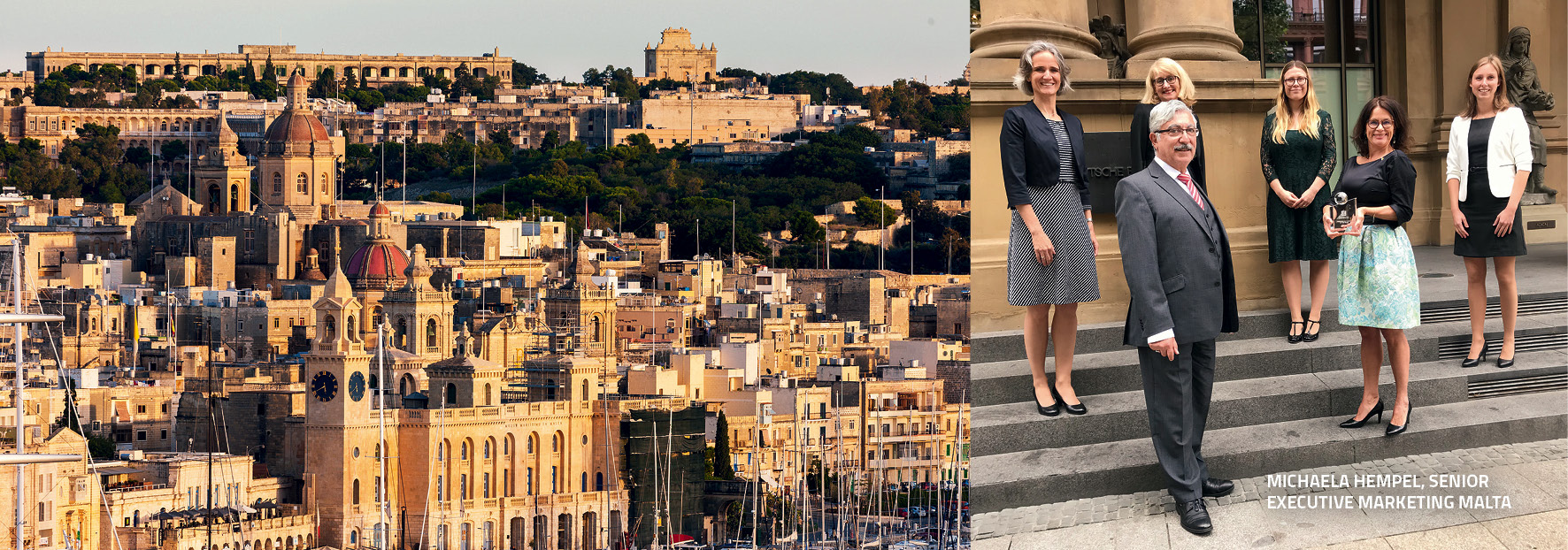
Well, you might think, from the ferry Syros doesn't look much different from neighboring Mykonos or Paros: rocks and barren hills. Is there supposed to be a real El Greco to admire there? At least that's what someone whispered in my ear. But then the ship turns a corner and enters the wide bay of Ermoupoli. And you are amazed: the small town is spread over two hills, each crowned by a mighty cathedral, with colorful neoclassical and Venetian-style buildings at its feet. Columns, arches and balconies adorn the houses. A colossal dome stretches towards the sky, shimmering sapphire blue like a precious stone.
Do the ornate facades reflect the well-being of the islanders? A huge ship's hull on the left side of the harbor could be a source of prosperity. The history of the shipyard doesn't go back that far.
In the 19th century, the name Syros appeared more prominently on British Admiralty nautical charts than that of Greece.
However, the island was already an important hub of Mediterranean trade in ancient times. It even appears as Syrii in Homer's Ulysses. Ermoupoli, however, only developed after 1822, as a result of the Greek uprising against Turkish rule. 5,000 refugees, mainly from the island of Chios, found a new home here. The people of Ano Syros, which was 600 years older, welcomed them with open arms. Firstly, because both groups adhered to the Catholic faith - in contrast to Greek Orthodox communities elsewhere. And secondly - and foresight plays a dominant role here - because the new arrivals brought crafts and science with them. Smart thinking, because they founded the first hospital and the first grammar school in Greece. They also founded the first modern shipyard, from which the first steamship was launched. Weaving mills, soap factories and tanneries were also established. This is why Ermoupoli, named after Hermes, the god of trade, was also considered the most splendid and one of the richest cities in the country at the turn of the century. To this day, Syros is the administrative center of the Cyclades, which surround it in a circle. And so it is surprising that the island is more of a daisy when it comes to tourism. A delightful one, though.
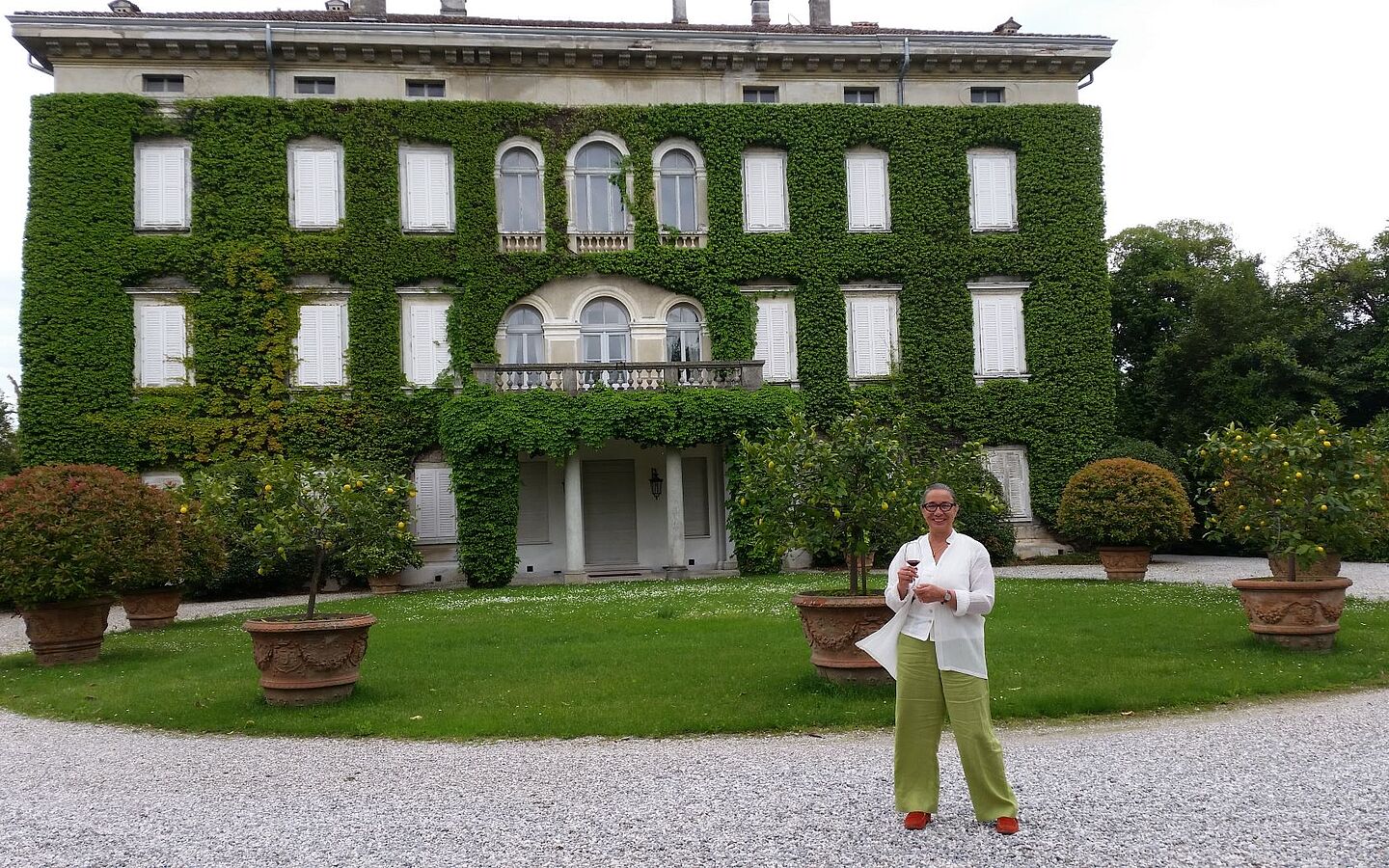
When asked why, my attractive host Terezdina Rigouzzo smiles mischievously: "Is it so wrong to be ignored by mass tourism? And if no cruisers overrun our little gem?"
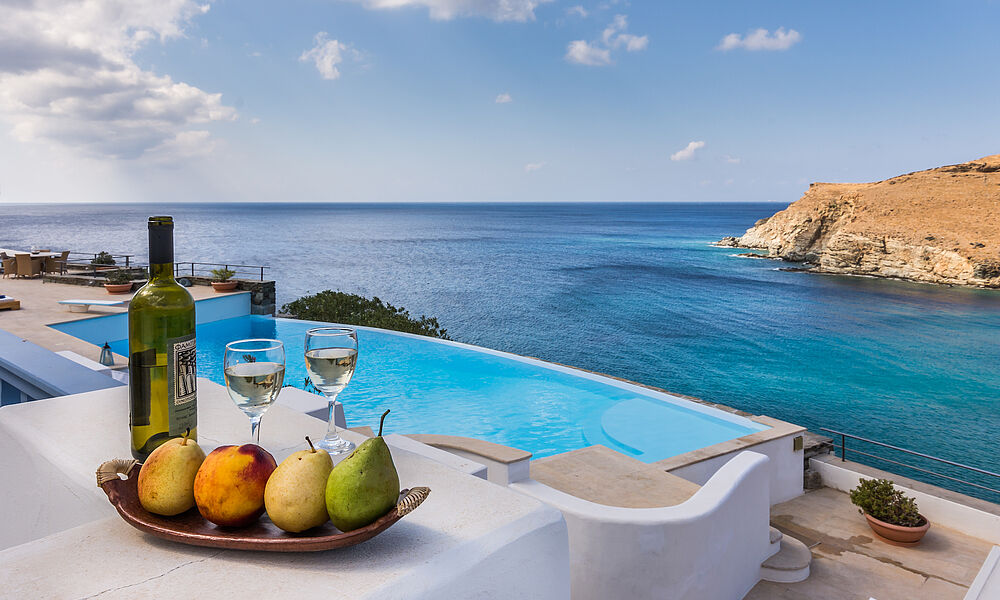
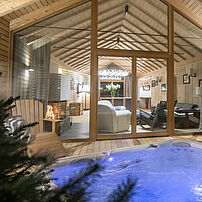
The island is indeed small, measuring just eight by 16 kilometers. It is inhabited by 25,000 souls and has a rather modest network of narrow, winding roads, some of them gravel. The young Greek woman is the owner of the B&B Hotel Pino di Loto. The name is dedicated to her grandfather. "He enjoyed the afternoon in the shade of the pine tree". The gnarled conifer still stands, surrounded by stone basins. In grandpa's day, wine was trodden in it, as Terezdina explains. The hotel complex with six suites, two of which have a mini pool, is spread over three terraces above the fishing village of Kini. A dream in snow-white, furnished with natural materials from the Greek producer Coco-Mat. The narrow road down to the two sandy beaches is not necessarily suitable for those with bad knees. But the view of the enchanting gardens distracts from the pain. Pomegranates and grapes, olives and citrus fruits ripen here. Bougainvilleas add a splash of color.
Insider tip in Greece
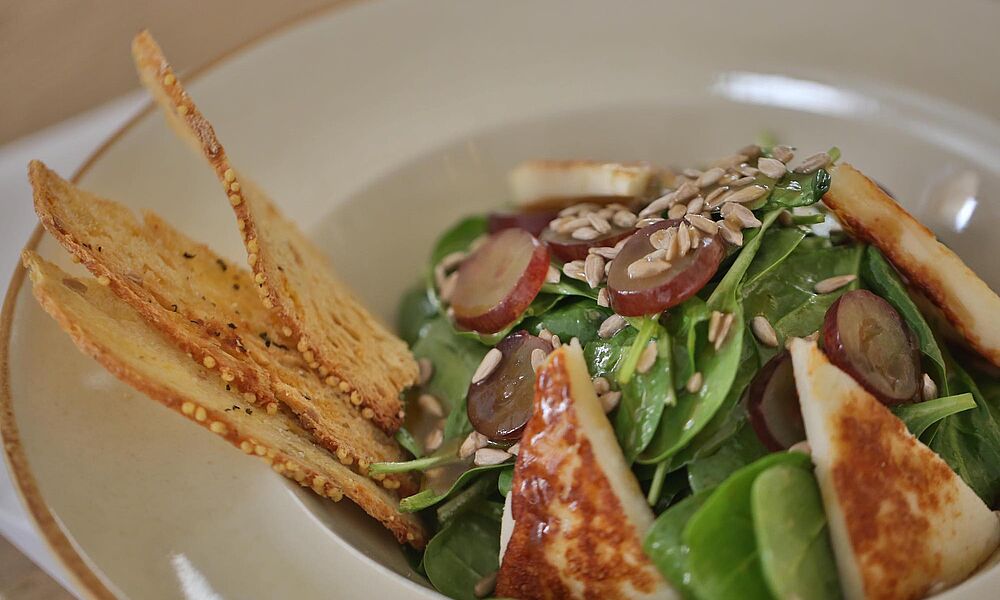
The best time to visit is during the fall vacations. The sun is no longer as hot as in midsummer and the crystal-clear sea is still 26 degrees. The charm of everyday Greek life then takes over again, with a more urban focus than bathing fun. At the weekend, however, Kini is once again a hive of activity. As if it were the last opportunity to feast together before the quiet winter sets in. Long tables are set up on the beach. One by one, members of extended families arrive. From Athens, as they say. The white-haired old people settle in at one end of the table, the grown-up children sit in the middle and the grandchildren fidget at the other end. Busy waiters set out bottles of wine and carafes of water, serve platters of freshly baked white bread, colorful salads and deep-fried seafood. Whole fish and prawns follow, surrounded by vegetables and potatoes. The setting would be Hollywood-worthy. Especially as the guests' clothing, hairstyles and sunglasses speak for skillful styling. And for well-filled accounts. "They own vacation homes or villas here. Some rent them out in the summer," says Terezdina. The social flair reminds me a little of Sylt. Just like there, the island has quaint tavernas by the water as well as fine restaurants. The food is fresh and delicious, whether traditional or modern.
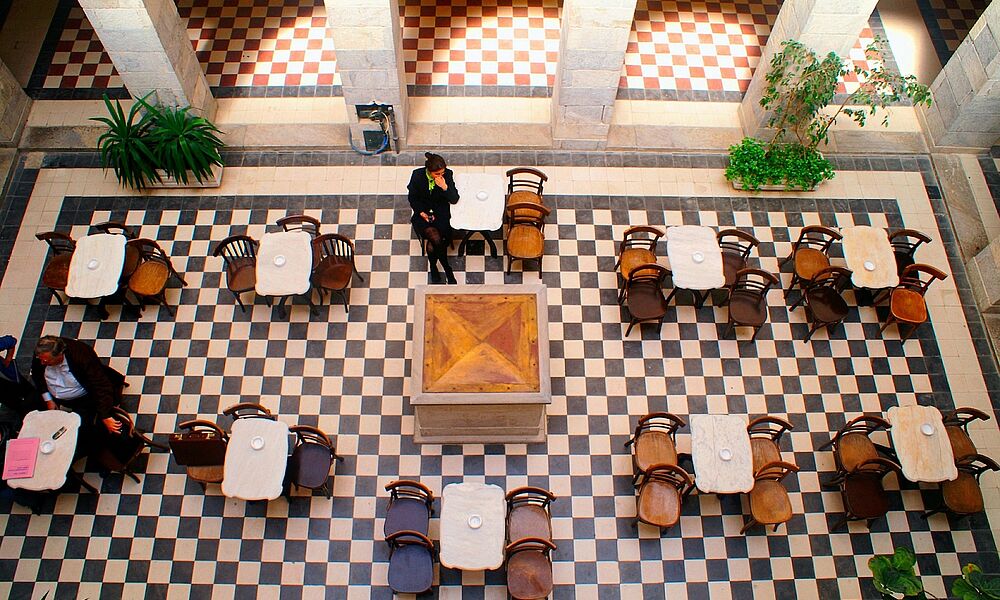
In autumn, there is little traffic on the marble-paved streets in the center of Ermoupoli. I stroll along the pretty promenade, am delighted by the terrace cafés without crowds that line the other side of the harbor road and the charming boutiques in the pedestrian alleys. Here too, cool fashion rather than kitschy souvenirs. The numerous opticians catch my eye. Of course, you shouldn't hope for bargains. Not for clothes and certainly not for glasses. They tend to sell high-end labels. "Elsewhere it might be Jimmy Choo pumps that the ladies are after, but here it's sunglasses," says Stavros Kois. The delicate man, who crosses my path several times during the day, always wearing different glasses, is something like the king of Syro's opticians. Charming, fashionably dressed and extremely hospitable. He shows me his childhood home, a palazzo-like residence from 1860 just around the corner from his flagship store. I admire the beautiful ceiling frescoes in the salon, the museum-quality dental practice that his father ran and a kitchen just like it, with lots of stucco and ornamentation. "Next time you come, you're welcome to stay here," he says. The house is empty. If I had enough money, I'd buy it immediately. Stavros Kois shakes his head. "I love my heritage and will definitely preserve it". I find the video of Robie Williams' "Feel" on his website: "Real love, feel the home I live in" is one of the lines. Fits!
Greek glamor for connoisseurs
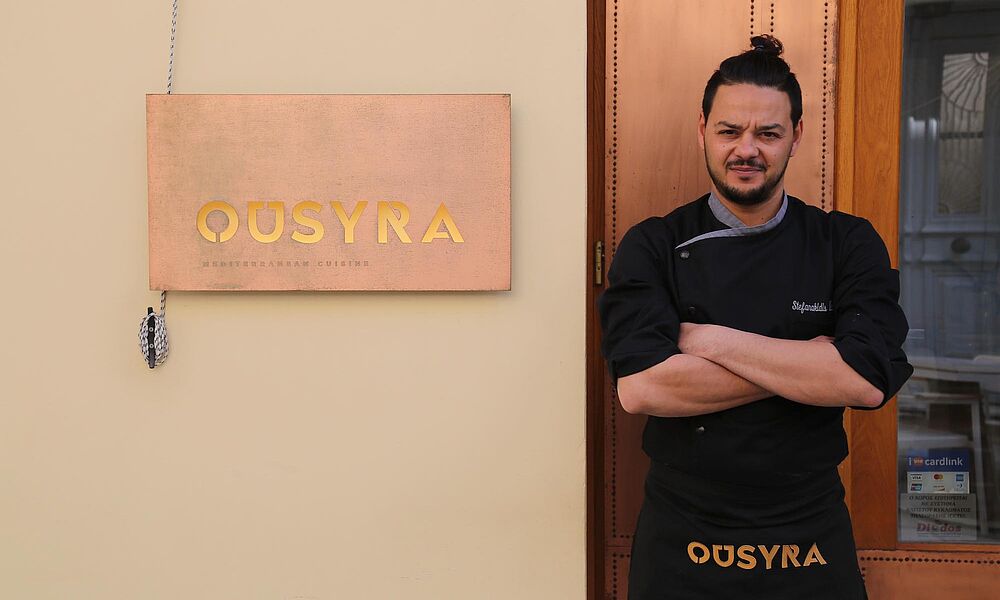
A tip from Terezdina is the Plakostroto taverna in the village of San Michaelis. It's only a few kilometers from Kini as the crow flies, but it takes an hour to get there via the winding road. The route continues uphill past the fortified town of Ano Syros. The Argos Mihail chapel marks the highest point. Good if you calculate the time-consuming journey correctly. Otherwise you'll miss the magnificent sunset. I'm out with friends. If we hadn't made a reservation, there wouldn't have been a free seat. Deep below, the fireball plunges into the Aegean. Almost every guest is probably posting "most beautiful sunset in the world" on Instagram. The Greek wine is flowing - don't think of Udo Jürgens now - the varied home cooking is sumptuous and delicious, the price is unbelievable. We split the bill, 20 euros per person including a substantial tip. The next morning I remember El Greco. The icon hangs in a church in the Psara district. I have to admit, the painting didn't immediately catch my eye. A small early work in the truest sense of the word by the main master of Spanish Mannerism. The painting is called "Dormition of the Virgin Mary" and was painted in 1567. It was only in 1983 that it was analyzed as an original by the artist from Crete. The late realization sounds like a metaphor for Syros. It will probably take a few more years before this island jewel is recognized as such beyond doubt.



![[Translate to en:]](/fileadmin/_processed_/0/3/csm_Karibik_Kachel_Website_bd14d92320.png "[Translate to en:]")
![[Translate to en:]](/fileadmin/_processed_/d/c/csm_csm_Burj_Khalifa_6aa4204cda_c60dbba775.png "[Translate to en:]")

![[Translate to en:]](/fileadmin/_processed_/5/6/csm_2_prb23_0733_web_230fecf93e.jpg "[Translate to en:]")













































![[Translate to en:]](/fileadmin/_processed_/0/3/csm_Karibik_Kachel_Website_4fa96af5ad.png "[Translate to en:]")
![[Translate to en:]](/fileadmin/_processed_/d/c/csm_csm_Burj_Khalifa_6aa4204cda_6e24649320.png "[Translate to en:]")
![[Translate to en:]](/fileadmin/_processed_/5/6/csm_2_prb23_0733_web_8dbd0bd4df.jpg "[Translate to en:]")